Choosing a fly line.
Choose the line first not the rod!
Fly lines these days come in a host of lengths, weights, densities, profiles and even colours. The first and most important point is that the fly sizes you intend to cast will dictate the line weight you need and the line weight will dictate the rod strength you need. For example small trout dryflies will cast on line weights from AFTM 0 up to about AFTM 6 and you should take into account the heavier the line the further you should be able to cast but the less delicate the presentation. Larger or weighted trout patterns will need line weights of anything from AFTM 5 – 8. Even heavier or more bulky salt water flies and you should be looking at AFTM 7 – 9 and big Salmon tubes, poppers and streamers from AFTM 8-12.
Next you should consider the profile or taper and the head length.
Double taper or weight forward?
The Different Line Tapers or Profiles
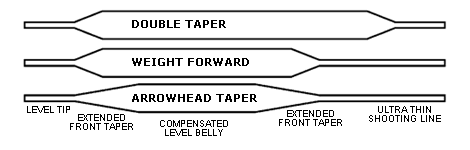
The correct line weight that loads the fly rod optimally is related to the length of line that the angler can comfortably ‘aerialise’ ie put out of the rod tip ring. Experienced casters are able to aerialise a longer line than can beginners.
A double taper line is very versatile, in that it allows you to put as much out off the rod as you or the rod can handle. Fly rods can, in fact, handle a range of line weights either side of that ideal weight which loads it optimally but if you overload a rod you may break it. The trouble with double taper lines is that they do not shoot very well and distance casting is harder to achieve.
Weight forward lines – which incidentally should be more accurately have been called “less weight behind lines” – are generally easier for the novice, provided you stick to the shorter head (or belly) versions. The ideal for a novice is about 10mtrs on a single hander and 13mtrs for a double handed rod. As you get more expert you will be able to handle longer heads. By the way, the total weight of the head you putt off the end of rod should also be the optimum weight to load that’s rod’s spring. If it is, it will feel “well balanced” if it isn’t, you may just think you are lousy caster when in fact it is not your fault at all. I would think that a good third of the casting faults I get to deal with are caused by this single problem.
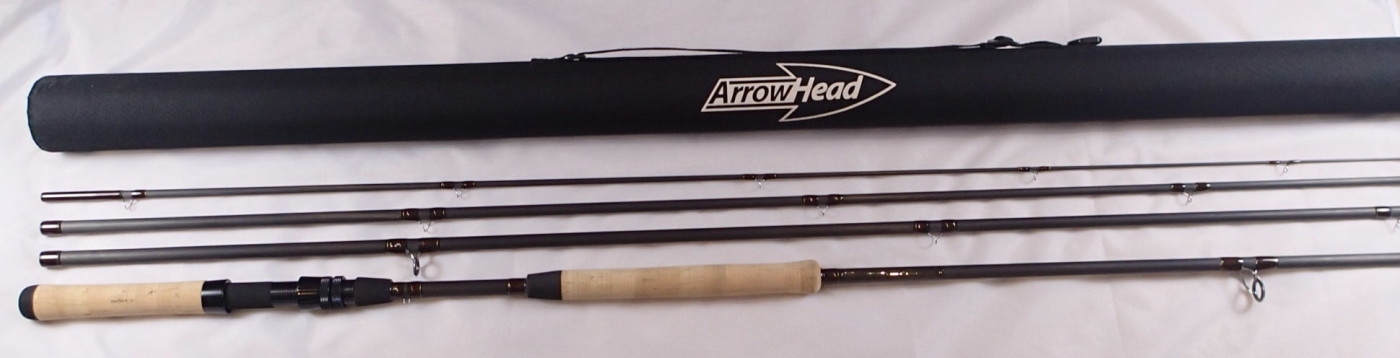
Ideally therefore you would hope that buying a line with the same AFTM number as the rod would be the solution. But sadly a lot of rods are designed by experts to suit an experts length of line (and therefore weight) and not the amount you might be able to handle. Many of the American manufacturers are shockers at this. Then you have to take into account that a line size is actually a weight range within which that line supposedly fits and one manufacturers 6 can be pretty close to another manufacturers 7. If the belly lengths are different, remember AFTM weight is a fixed 30ft + 6″ to 2′ level tip, the 6 could actually be a lot heavier. All of which is to say, if a rod manufacturer does not specify the EXACT line to put on his rod to get the best from it, don’t buy it unless you’ve tried it. Again I have had literally 100s of pupils here with the latest hokey-cokey 2000 rod given for birthday, Christmas, retirement etc and been massively disappointed that they cast considerably better with one of my Arrowheads before we have even started the lesson!
If you are following me so far you will appreciate the importance of casting with the correct length of line off the end of the rod. It is therefore obvious (to me at least) to point out where that is. In the early days I used to (and still do sometimes) mark peoples lines so they could see it. That was until I found a manufacturer that could build in a colour change at this point. My idea is now copied by just about all the manufacturers but if you are again just starting out it is better to get one of these and not just a plain colour line, even if they are a little cheaper.
Now that you can see where the head joins the running/shooting line (see below), you will cast with the optimum weight of line every time and greater distance will then be achieved by shooting the relatively thin and light shooting line.
Hopefully you will also now see why, even though for my rods I have an exact matching twin line, my lines and rods are all given more than one AFTM weight eg 6/7 or 10/11. Of course the safest bet is to choose my rods to cast my lines, in which case they are all perfectly matched to save you the worry regardless of your skill level!
WHY ARE ARROWHEAD LINES SO GOOD?
I am often asked why my ArrowHead lines cast so well?
When I first started designing lines in the early 90s there were only double taper lines for salmon fishing and either double taper or simple weight forward trout lines to choose from. The weight forward at that time really should have been called “a less weight behind” as that was all it was. Alternatively, you could, as they were doing in Scandinavia, cut down a DT and make a shooting head. Trouble was the weight forwards and shooting heads gave you distance but lacked any finesse at all in presentation, whereas a double taper presented well but would not shoot (much).
It was the dynamics of the two lines that I examined before coming up with some basic design parameters for a totally new combination of DT and WF. The weight change between the belly and both the front taper and the rear running line is critical. A certain degree of drag from the rear running line in flight is necessary – which is why most shooting heads don’t work as well as they should in theory. The length of the back taper not only affects the flight but also the energy transfer in the loop. The length and tapering of the front taper affects speed of turnover and the presentation of different fly profiles and weights.
This is why the gradient and length of the tapers, the weights of the running lines, the belly lengths and diameters and even the core and coating material are all balanced on each Arrowhead line and each line is refined to then suit the general size of fly you might cast with that line.
My invention of the two coloured lines, ArrowHead Twin-lines, was then added so that the caster could see to put the ideal amount off the end of the rod. This is probably the only thing I might be remembered for (now copied by all and sundry of course) but my earlier work on the weight changes and tapers is still the main reason why your ArrowHead line will load the rod, fly true without bunching and flip over with the gentlest of presentations. It is also why your ArrowHead line will still stand out from the rest.
Choosing your ArrowHead Line
Here is a summary of all the current ArrowHead models – click on the title to take you direct to that line model in the shop.
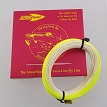
combine my specially developed ArrowHead tapers and twin colour (and/or densities) coatings with slightly shorter heavier heads to make them just dead easy to cast. All you do is retrieve the line to the point where the colour changes and you will have the perfect line length to load the rod. For novices and experts alike these lines are perfectly balanced, will fly true and lie straight on the water. They are a joy to cast giving you distance with ease.Available in AFTM sizes 5/6 through to 7/8 and in 4 densities Floating, Neutral,Fast Sink and Hi Density.
ARROWHEAD TROUT DRY & WET LINES – 
Longer tapers and head lengths for the more experienced caster wanting to aerialise more line or present flies even more delicately. These are fabulous lines with extra long front tapers for very delicate presentation, a medium length balanced belly and long back taper for long distance double hauling. They are also a delight to roll and Spey cast. Manufactured in a hollow core process that makes them lie straight on the water – they are, in short, a unique fly line that casts like a weight forward, but fishes like a double taper. A great demonstration line for instructors too! Available in AFTM individual line sizes 5 – 9 and in 3densities Floating, Neutral and Fast sink.

Specialist salt water lines with quick fire distance capabilities in sea breezes andwith heavy or air resistant flies. Suited to warm or cold climates. Available in Floating only and in AFTM sizes 8/9 and 11
.
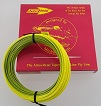
Fresh water lines for big and air resistant flies, fished in and on fresh water in colder climates. AFTM sizes 8/9 and 11.
NEW ARROWHEAD DREDGER TWIN-LINES – 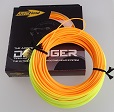
A joined up, seamless version of the Dredger using Twin-Line Technology, looped at thefront end for attaching 4 x 15ft tapered tips in different densities. Available in AFTM sizes 8/9, 10/11 and 11/12 and in floating or Hi Density Belly coatings. Full set £94.95 components available separately.
NEW ARROWHEAD SKATER TWIN-LINES – 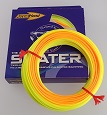
A full floating, full line dredger for long distance casting and the ultimate in gentle presentation for riffling or skating flies either on or just under the surface.
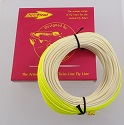
My classic range of Spey Casting Salmon lines available in head lengths of10 – 23mtrs, in AFTM 9/10, 10/11 and 11/12 sizes and in 4 densities Floating,Intermediate, Fast sink and High Density.
THE ORIGINAL ARROWHEAD DREDGER – 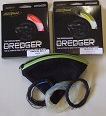
The amazing multi-tip Salmon shooting head sink tip system with separate components joined with loop to loop connections. Single 10/11 size with 3tapered 15ft tips. Components available separately.
Choosing the correct head length for your fly fishing line
When choosing a conventional weight forward line, the length of the forward portion (aka the ‘head’, or ‘belly’) must be such that you can aerialise it comfortably. Once again, the better caster you are, the longer the head you will be able to handle. Beginners should start with a head of no more than 10 or 12 metres unless you buy one of my ArrowHead lines which were developed to do away with this problem. The reason for this is that all ArrowHead lines incorporate a long, graduated back taper behind the head or belly which allows a much wider range of line length to be aerialised compared to a conventional weight forward line. This design means the lines are suited to beginners, improvers and experts alike.
Sinker or floater
Beginners should always start with a full floating line. For river trout fishing, a floating line is used in nearly all circumstances and maybe 85% of one’s fishing on small still waters. Later on, particularly for big still waters, you can choose from a variety of sinking lines to fish at different depths. Sinking lines are available in a range of densities, which govern both the speed at which they sink and the effective depth at which one can fish. Sinking lines are thinner than floaters (weight for weight) and will therefore cut through the air more efficiently. For this reason, a sinker is often easier to cast into a strong wind and for maximum distance.