Casting a fly is one of those irritating things in life that looks terribly simple when someone else does it but is not quite as easy when you have a go yourself! It is important to understand something of the mechanics involved. Before we start, there are two fundamental principles I try to instil:
1. The rod must do the work, not you!
A fly rod is a long springy stick. To cast efficiently, we must move the rod in such a way that its full potential as a long springy stick can be achieved. Think of trying to flick a piece of mud off the tip: the flex and recovery of the rod is the action required, not a pushing movement.
2. The line has to follow the path the rod tip and the rod tip follows the path of your thumb
The rod merely amplifies the movement of your hand. If you pay attention to what your thumb is doing (and getting that right), the rod tip will go where it needs to and the line will follow. Watch that thumb when trying to correct a fault, you will learn the correct movements more quickly.
The First Hurdle
The rod merely amplifies the movement of your hand. If you pay attention to what your thumb is doing (and getting that right), the rod tip will go where it needs to and the line will follow. Watch that thumb when trying to correct a fault, you will learn the correct movements more quickly.
Hold the cork handle very gently – thumb on top, as if you were shaking hands. If you hold the rod handle as if it were very fragile it lets the rod do the work and will automatically improve your casting.
Stance – I find beginners make fewer mistakes if they stand with the right foot slightly forwards (if casting right handed).
If you are learning on grass, go straight to the overhead cast. If you are learning on water, start with the roll cast. Click the appropriate link in the sub menu.
THE OVERHEAD CAST
1. “TIP”
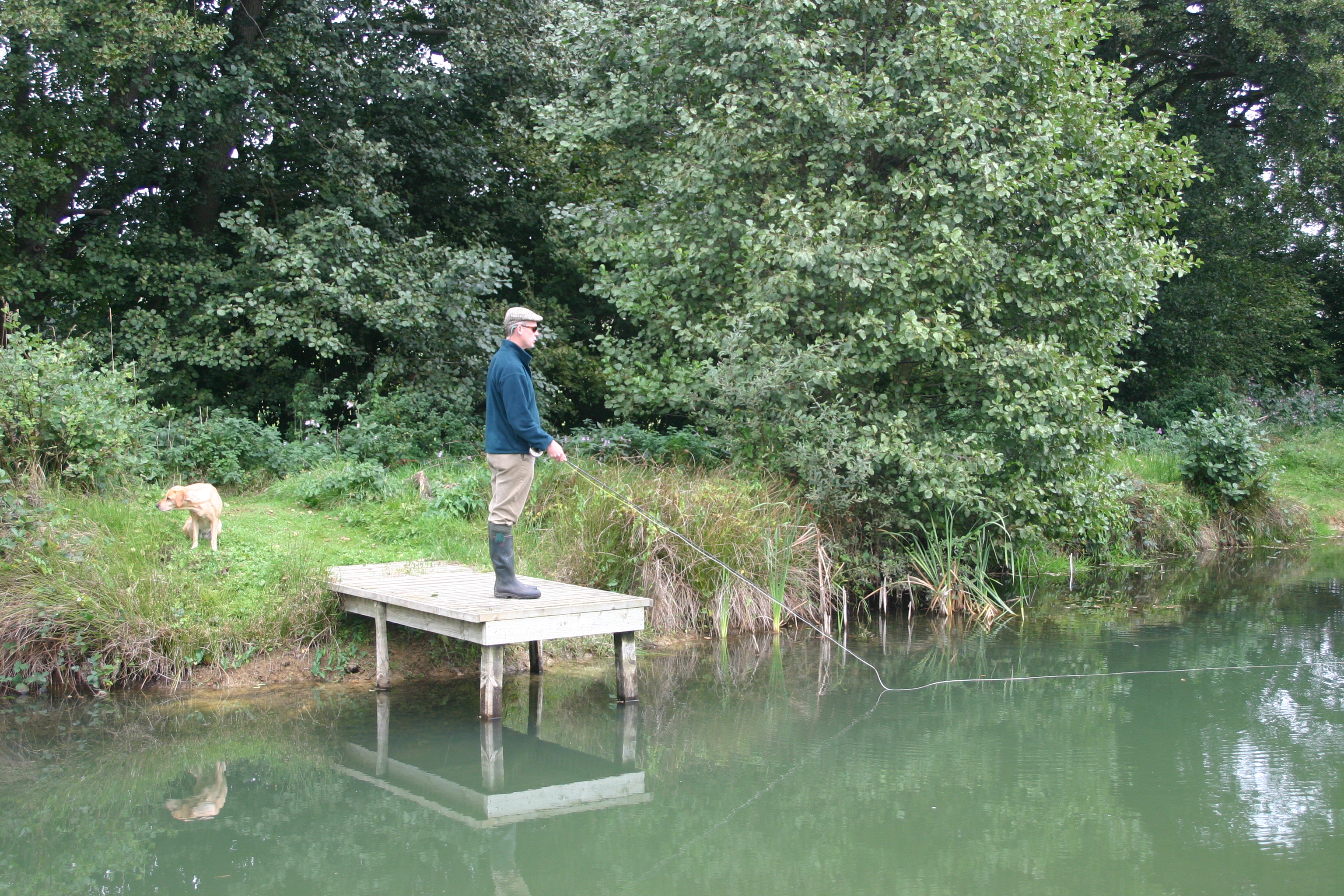
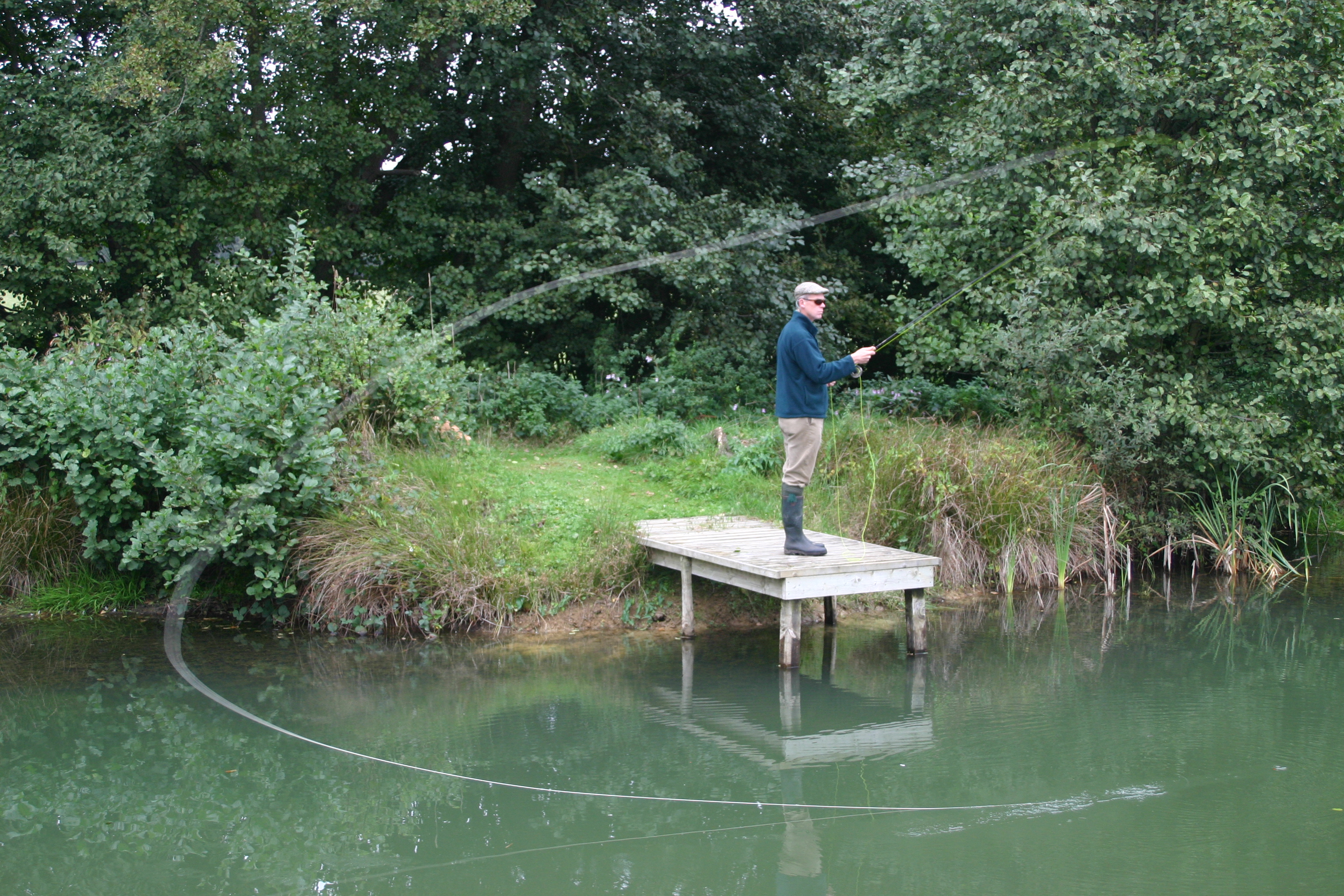
Start with the rod tip touching the water and the line straight. The movement begins by lifting the forearm slowly at first. When forearm (and rod) have reached about the 10 o’clock position, accelerates rapidly, then come to a sudden STOP when the thumb of your casting hand is level with the brim of your hat and pointing vertically upwards. With the thumb in this position, the rod itself finishes leaning slightly back (at approximately the 1 o’clock position). Note: the acceleration and stop are made over an abbreviated arc -barely 90 degrees- which drives the fly line high into the air behind you. The whole phase (lift, plus acceleration and stop) is usually called the ‘back cast’, but would be better called the ‘up cast’.
2. “TOP”
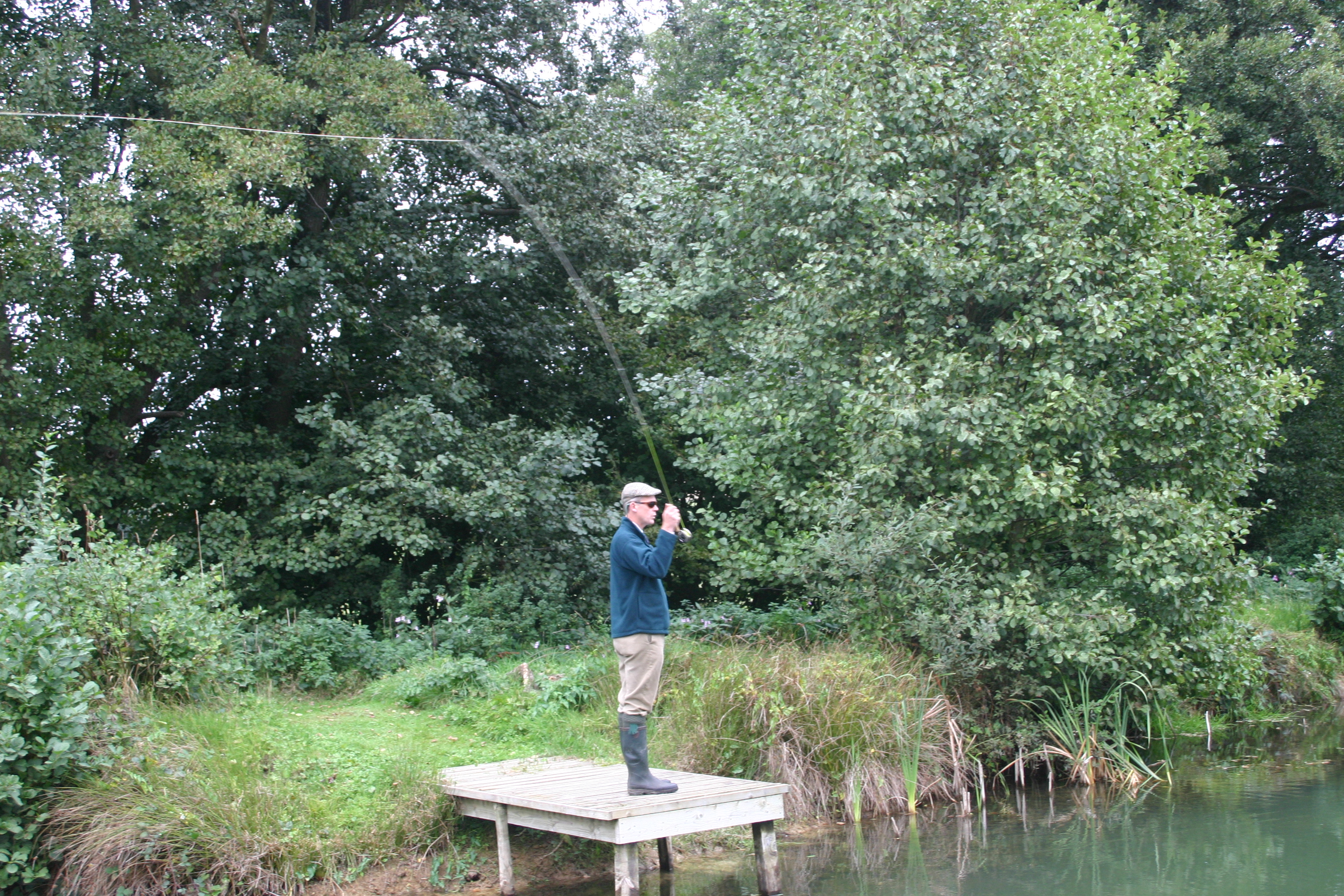
Concentrate on stopping your thumb in the TOP position. If your wrist cocks backwards and the rod goes further back than this, the cast will be spoiled. Instead of the line straightening out high above the ground, you will have introduced a downward component. Allow a short pause for the line to straighten behind you, before making the ‘forward cast’. But don’t delay too long, or the line will start to fall.
3. “TEN”
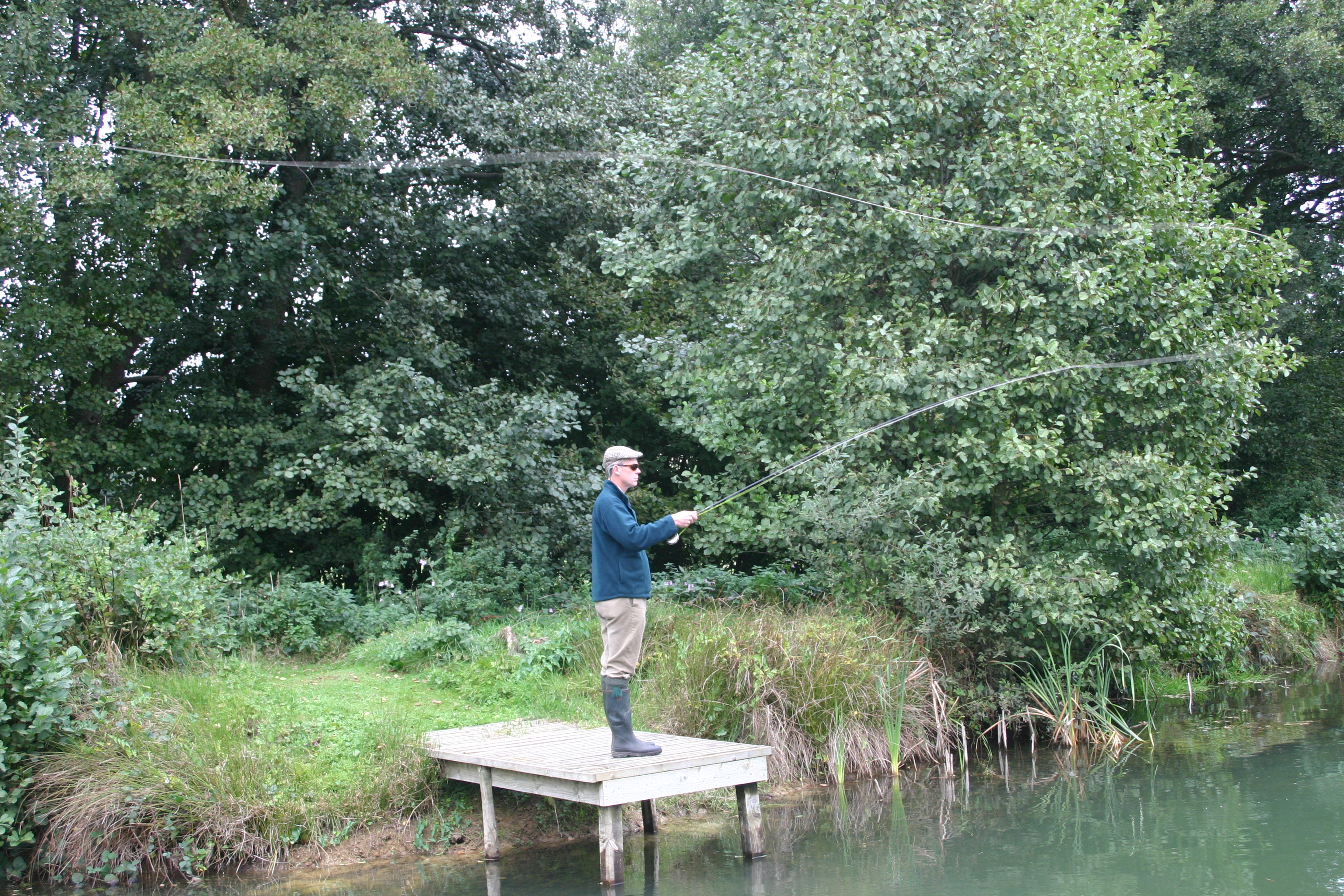
For the forward cast, tap firmly forwards and down with your thumb stopping at the 10 o’clock position. This movement is just like tapping a tack into the wall in front of you with a light hammer. This ‘tap’ should flick the fly line out over the water, not down onto it. Once the line is on its way, rolling out over the water, allow the rod to follow the line as it falls under gravity.
THE ROLL CAST
The roll cast is a wonderfully useful cast. It is especially useful for beginners since it comprises a few simple steps that don’t require any precise timing. You can use a roll cast to:
- Straighten an untidy line prior to an overhead cast.
- As a cast in its own right when you have no room behind for a back cast.
- For safety, when casting from a boat in a high wind.
- To bring a sunk line up onto the surface of the water.
The basic movements of the roll cast are: Lift, Sweep, Hit.
1. “LIFT”
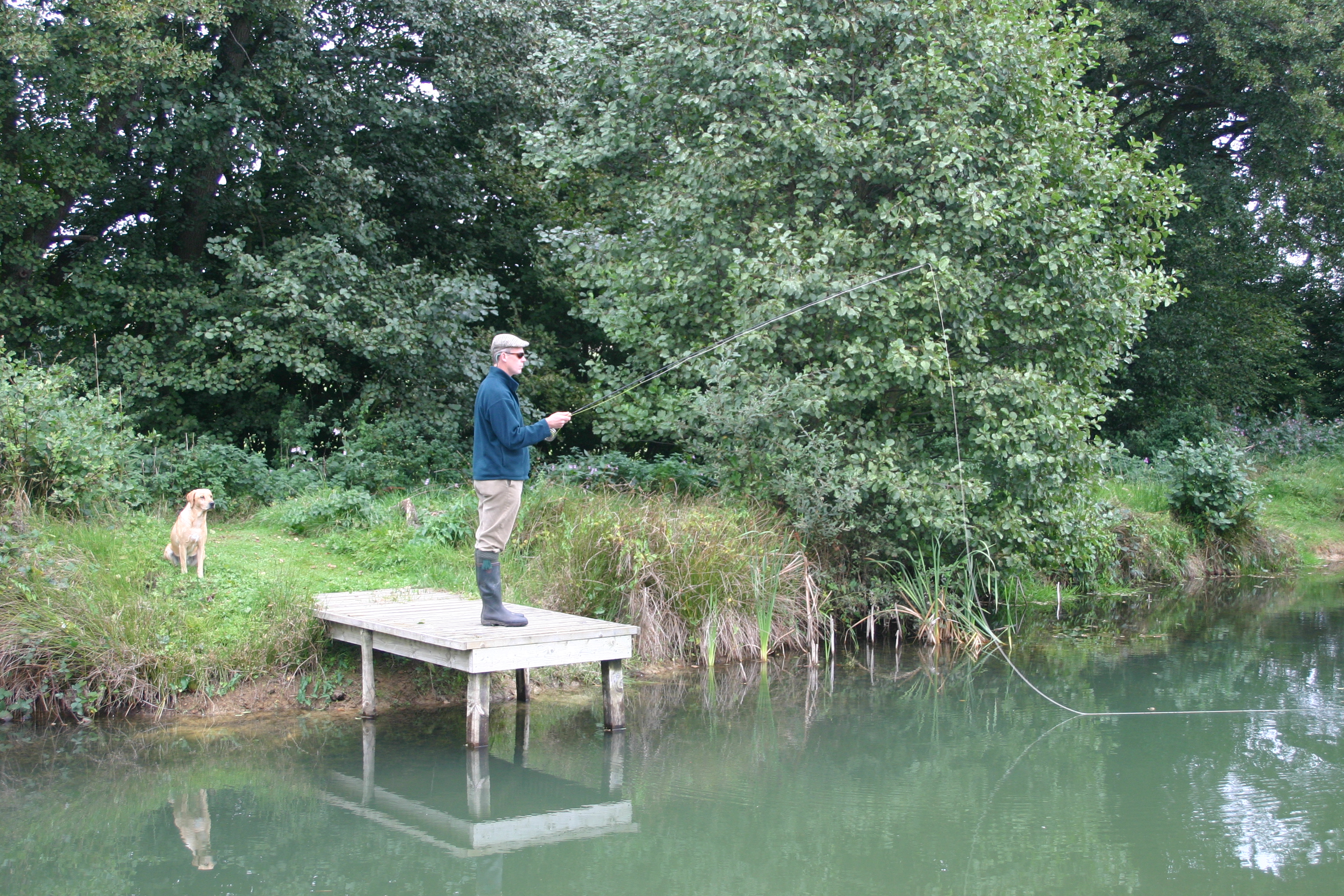
Start with the rod tip touching the water and then raise the rod tip, lifting slowly but smoothly up to the 10 o’clock position, and pause.
This lifts the line nearest you off the water and the rest feathering along the surface towards you.
2. “SWEEP”
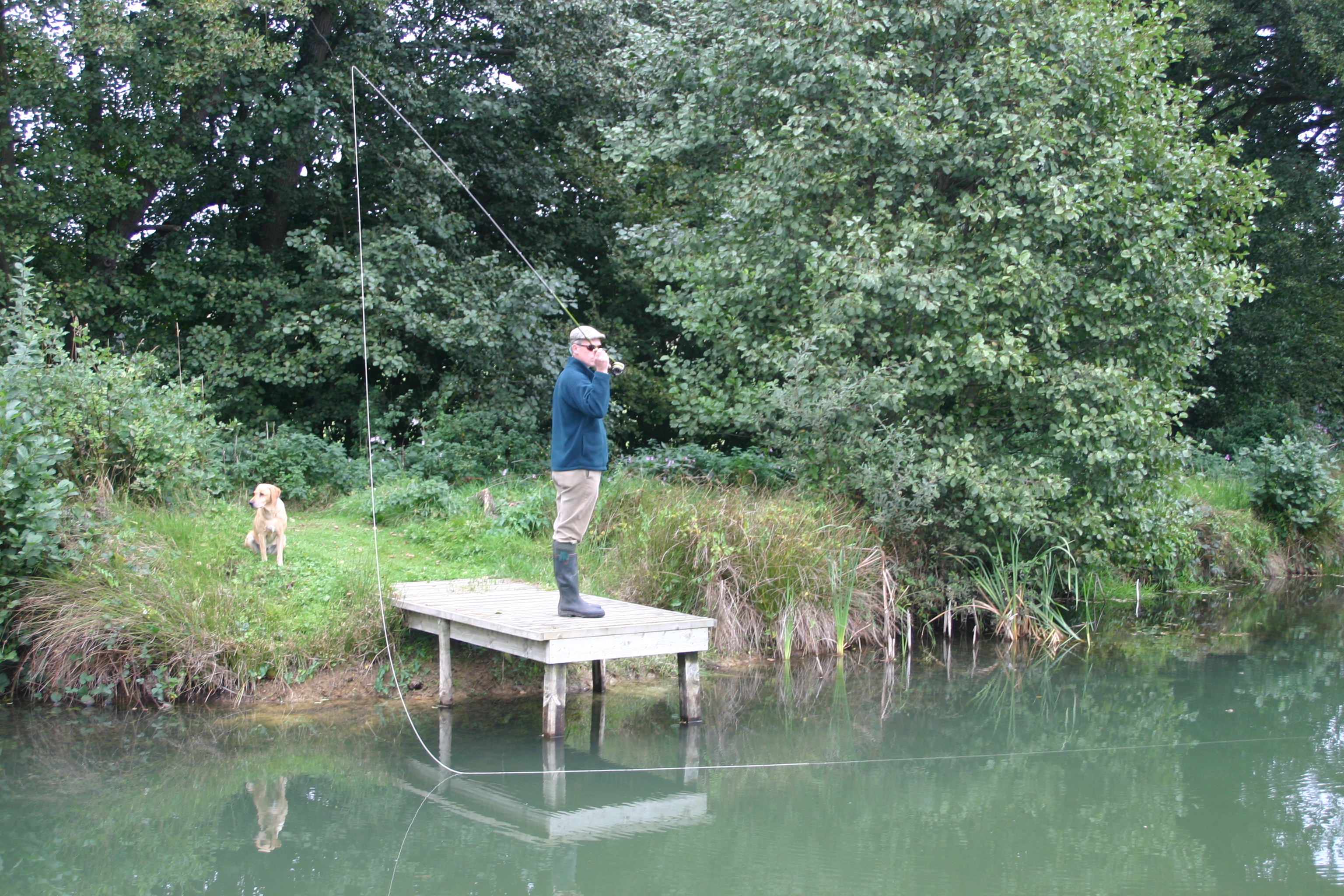
Now, maintaining the rod at the same angle to the water/horizontal, sweep the rod tip out to the side (to the right if you’re right-handed; to the left if you’re left-handed) and smoothly backwards, round in a wide arc; eventually, bring your hand around and up until your thumb is level with your right ear, with the rod leaning back in approximately the 2 o’clock position. Pause again.
At this point, your wrist should be cocked back slightly. The line should be hanging down from the tip of the rod, with the tip portion of the line and the leader lying in the water beside you. Looked at from directly side-on, the rod and the line hanging from the tip ring is a bit like a capital letter ‘D’ lying slightly backwards.
3. “HIT”
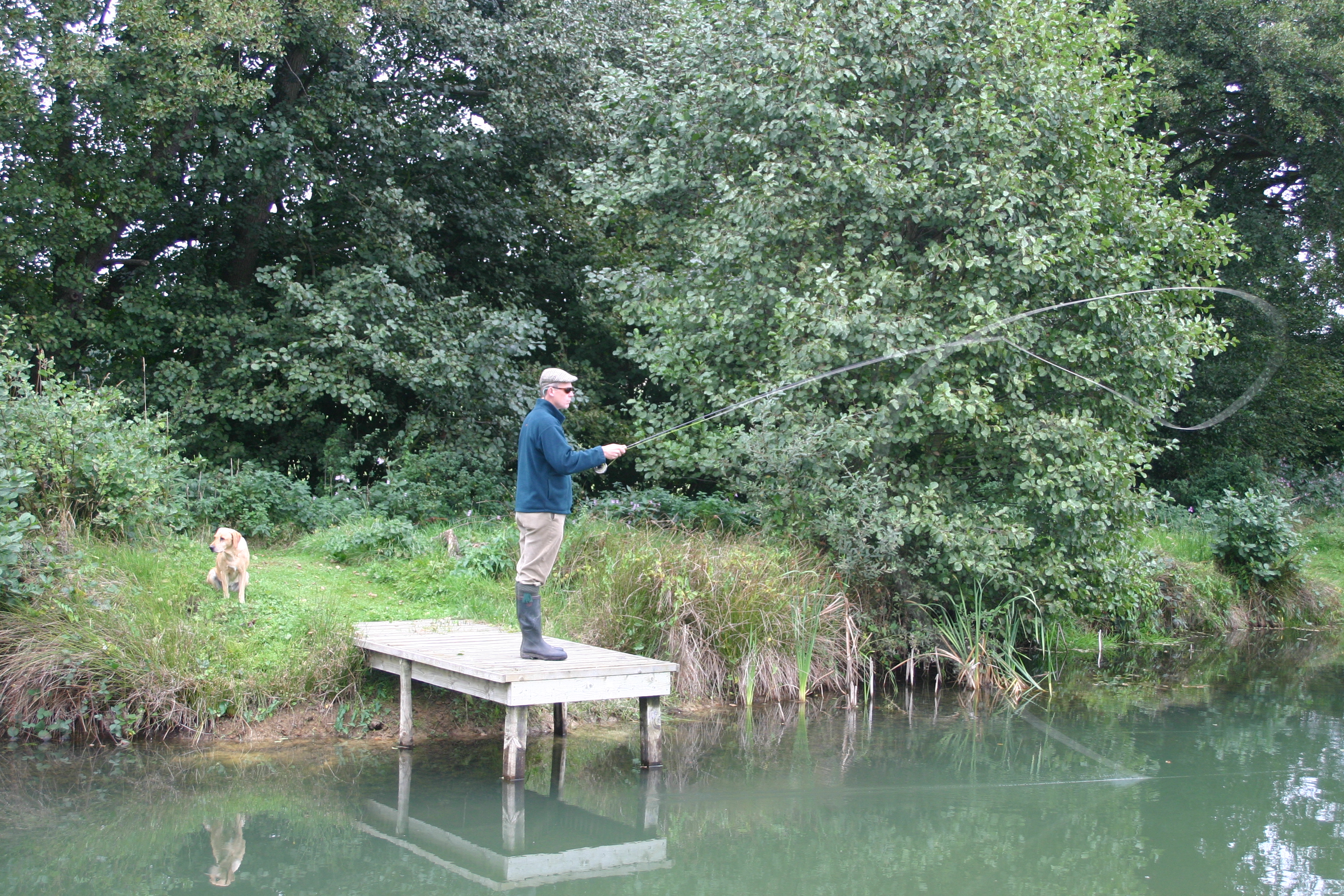
Drive your thumb forward in a firm flicking movement -straight at the target – stopping sharply at the 10 o’clock position in front. Imagine you are swatting a fly! This should literally flick the line off the water and roll it through the air towards the target. Once the line is on its way, allow the rod tip to drop, following the line as it gently settles onto the water. Remember, roll casting is technique, not power.
Seeking casting instruction? If you want details of my tuition and courses click here. Otherwise, do ensure you find someone holding a Game Angling Instructors’ Association approved qualification. You might be lucky and find an able amateur, but how would you know? Qualified instructors have been rigorously examined in both casting and teaching ability. It is far harder to break ingrained bad habits than to learn properly in the first place.